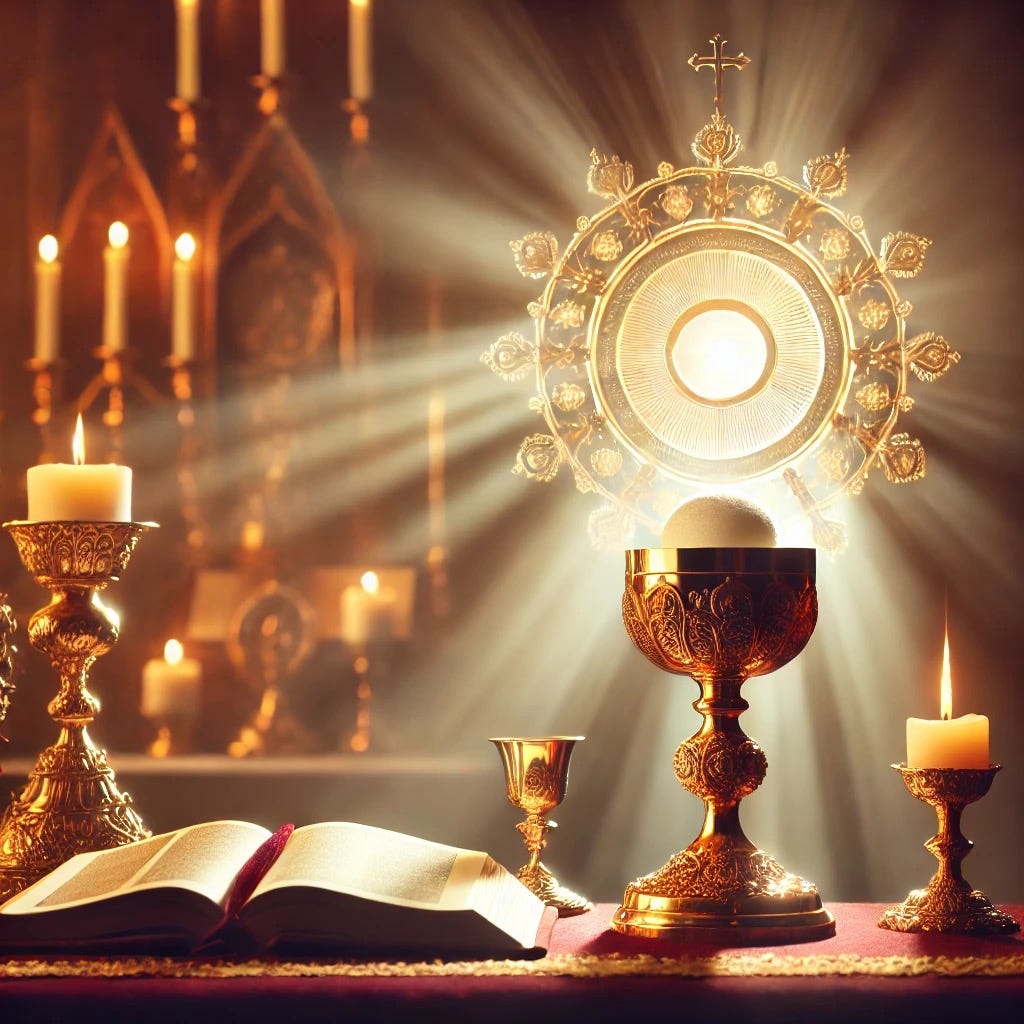
Why do I identify as Pentecostal-Orthodox?

I was recently asked the following question: Why do you identify as an Orthodox Pentecostal? The person asking was at a crossroads in their faith, feeling that the typical Pentecostal experience was no longer enough. They were searching for something deeper, something that connected them to the ancient faith while still allowing for the movement of the Holy Spirit.
They had encountered various groups—Orthodox Christians, the Convergence Movement, and the African Episcopal Church, among others—each claiming to represent the true ancient faith. They were curious to know why I embrace the term Pentecostal-Orthodox and whether this perspective might provide the depth and historical grounding they were seeking.
Here is my response.
A Pentecostalism that is More Than an Experience
Your question is a profound one, and I deeply appreciate the sincerity behind it. What you are feeling—the longing for something more than the typical Pentecostal experience—is a desire that many share. Pentecostalism, at least in many of its contemporary expressions, often thrives on momentary encounters with the Holy Spirit but lacks the structural and theological depth that would sustain a believer in a life of enduring faith.
Too often, it is a movement centered on revivalism without a deep well of historic tradition, which leaves many with powerful experiences but little doctrinal grounding. That is why I identify as Pentecostal-Orthodox—not as a hybrid of two conflicting traditions, but as one who sees Pentecostalism as an organic continuation of the early church’s charismatic and sacramental life.
For me, Pentecostal-Orthodoxy is not about choosing between two theological systems but about reclaiming the fullness of what the Church has always been. The early Christians were deeply charismatic—tongues, prophecy, and healing were not foreign to them but were expected — ordinary — elements of their spiritual lives. At the same time, they were deeply liturgical and sacramental, understanding that God’s presence was mediated not only through the spontaneous move of the Spirit but also through the Eucharist, Baptism, and the ancient prayers of the Church — the ordinary means of grace. Pentecostal-Orthodoxy is, therefore, a return to the ancient faith that was both Spirit-filled and deeply rooted in apostolic tradition.
The Search for the True Ancient Faith
You mentioned several groups that claim to embody the “real” ancient faith. That’s a fair concern, and I won’t pretend there isn’t some ambiguity when it comes to which tradition truly represents the early Church. The key to discerning this is not simply to listen to who claims the most authenticity but to examine which tradition actually maintains a continuity with the faith of the apostles and the early church fathers. What did the earliest Christians believe? How did they worship? How did they understand leadership, sacraments, and spiritual gifts?
The challenge is that many traditions have emphasized one element of the early Church while neglecting another. Some have preserved the ancient liturgies but have lost the expectation of the Spirit’s power. Others have embraced the gifts of the Spirit but have cut themselves off from the historic faith that shaped the Church’s doctrines and practices. Pentecostal-Orthodoxy seeks to reject this false dichotomy.
The faith of the apostles was both deeply mystical and grounded in Scripture and tradition. It was charismatic and liturgical, evangelical and creedal. Instead of choosing between being Spirit-filled or sacramental, Pentecostal-Orthodoxy embraces both as essential to the Church’s identity.
The Role of the Sacraments in a Pentecostal Life
I hear in your question a desire for something more than just emotional experiences. This is where sacramental theology becomes vital. If being Pentecostal at its best is an encounter with the Holy Spirit, then sacramental theology is what grounds that encounter in something deeper and more enduring. The sacraments are not just rituals to be performed; they are the real and ordinary means by which God’s grace is imparted. Baptism is not just a symbol but a participation in Christ’s death and resurrection. The Eucharist is not just a memorial but a real communion with the body and blood of Christ. When understood rightly, these sacraments do not diminish the work of the Holy Spirit—they amplify it.
Imagine a faith where the power of the Holy Spirit is not limited to a revival meeting or a shout and dance but is encountered in every aspect of life. A faith where tongues, prophecy, and healing flow alongside the rich traditions of the Church’s historic prayers and sacraments. This is what Pentecostal-Orthodoxy envisions—a faith that is not bound by the limits of Finneys revivalism but is sustained by a deep and rooted tradition that has carried the Church for centuries.
The same Spirit that fell on Pentecost is the Spirit that moves through the liturgy, through the reading of Scripture, through the laying on of hands, and through the sacred mysteries of the Church.
Finding Home in the Fullness of the Faith
I commend you for your willingness to seek out a faith that is deeper than what you have known before. If you are sensing that there is more to the Christian life than what you have previously experienced, it may be because the Holy Spirit is drawing you toward a fuller expression of the faith. The book by Emilio Alvarez that you have is an excellent starting point, as it lays out this vision of a Pentecostalism that is both ancient and alive. But more than just reading, I would encourage you to experience it—to step into spaces where the historic faith is practiced in a way that still makes room for the Spirit’s fire.
Pentecostal-Orthodoxy is not a compromise between two traditions but a recognition that Pentecostalism, in its most faithful form, is already part of the ancient faith. The Church has always been charismatic, sacramental, and rooted in apostolic succession. If you are being drawn toward the ancient Church, you do not have to leave behind the power of the Holy Spirit to embrace it. Rather, you are being invited into a deeper and fuller encounter with the God who has always been at work in His Church.
If this resonates with you (and you dead reader), I’d love to continue this conversation. The journey into the fullness of the faith is not one that is traveled alone, but in the company of those who have walked this path before us. Blessings to you as you continue seeking the Lord’s leading in your life.
✠ ✠ Christopher Bryant, PhD, DMin
Primate, The International Covenant of Pentecostal-Orthodox Churches
Metropolitan Archbishop, The Archdiocese of Christ the Winner